Risk Factors for Breast Cancer
Breast cancer is a multifactorial disease. In most cases, it occurs without a clear cause. However, certain factors are associated with an increased probability of developing the disease.
The presence of one or more risk factors does not mean that a woman will develop cancer – it simply means that individualized surveillance is needed.
Non-Modifiable Factors
- Age – The most significant risk factor. Risk increases after the age of 40-50.
- Sex – The disease primarily affects women, although it can also occur in men.
- Family history – A first-degree relative with breast or ovarian cancer increases the risk.
- Hereditary mutations (e.g., BRCA1/2) – Associated with a significantly elevated lifetime risk. Where there is a strong family pattern, genetic testing can clarify whether an inherited mutation is present.
- Dense breast tissue – Increased breast density is linked to higher risk and more challenging imaging diagnosis.
Hormonal & Reproductive Factors
- Early menarche (<12 years)
- Late menopause (>55 years)
- Nulliparity or first pregnancy after age 30
- Prolonged use of hormone replacement therapy
These factors are associated with prolonged exposure to estrogen.
Modifiable Factors
- Obesity (especially after menopause)
- Sedentary lifestyle
- Alcohol consumption
- Long-term hormone therapy without medical supervision
Adopting a healthy lifestyle can contribute to reducing overall risk.
History of Benign Lesions
Certain atypical hyperplasias or a previous breast cancer diagnosis increase the risk of future occurrence.
What does all this mean?
Most women with risk factors will not develop breast cancer. Conversely, many women who are diagnosed have no apparent risk factors.
The key is individualized risk assessment and appropriate preventive screening.
A message for patients: Knowledge of risk factors is not intended to cause worry, but to guide proper surveillance and prevention.
Can I reduce my risk?
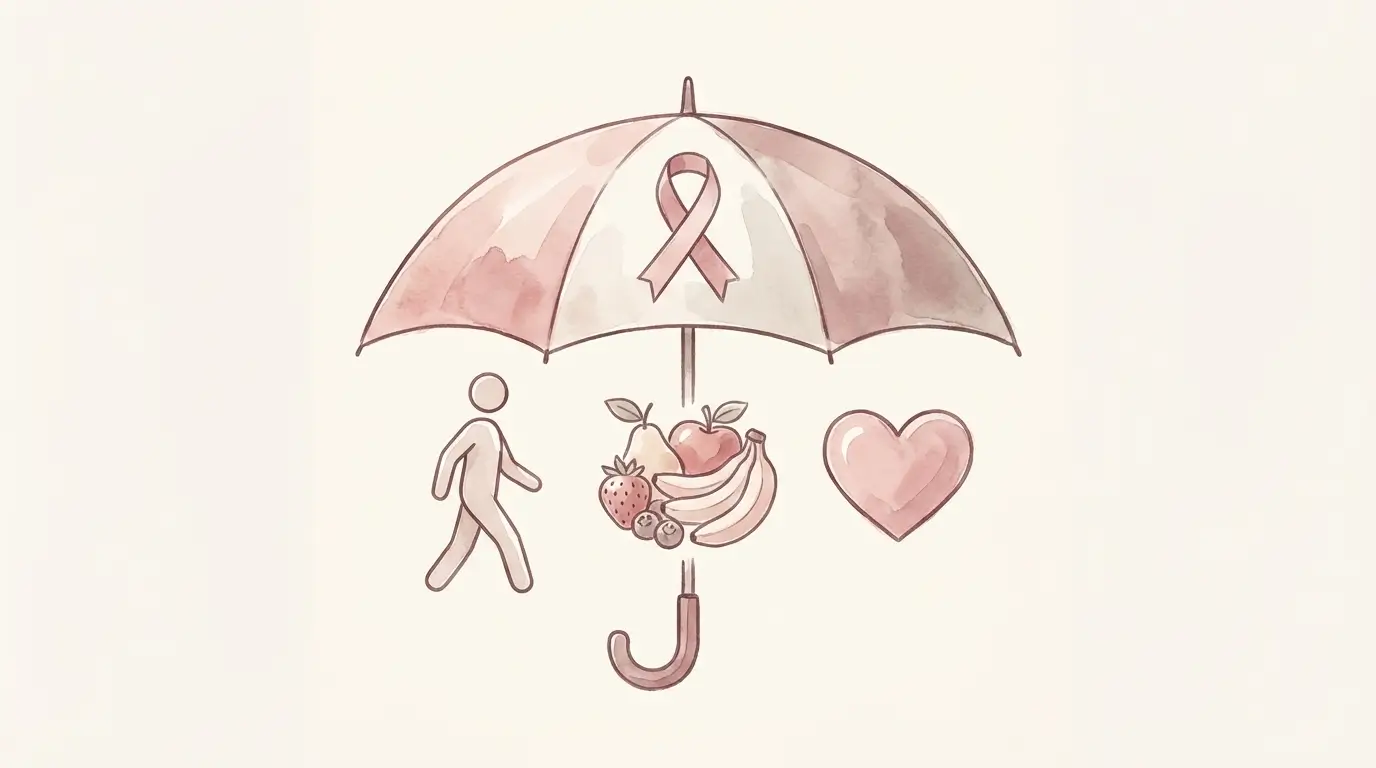
While we cannot influence factors such as age or heredity, there are practical steps that contribute to reducing overall risk and improving general health:
- Maintaining a healthy body weight – Especially after menopause, obesity is linked to elevated estrogen levels and greater risk.
- Regular physical exercise – Moderate physical activity (e.g., 30 minutes of walking per day) has a protective effect.
- Limiting alcohol consumption – Regular alcohol intake is associated with increased risk, even in small quantities.
- Balanced diet – A diet rich in fruits, vegetables, and fiber contributes to overall health.
- Breastfeeding – Where possible, breastfeeding has been shown to offer a protective effect.
- Systematic preventive screening – Early diagnosis does not prevent the disease, but significantly increases the chances of successful treatment.
Turning Risk Into a Personalized Plan
Knowing your risk factors is only useful when it translates into action that fits your particular situation. For most women, a standard combination of regular screening and monthly breast self-examination is entirely appropriate. For those with a stronger profile – a significant family history, a known genetic mutation, dense breast tissue, or a history of certain benign lesions – a more intensive plan may be recommended, sometimes starting at a younger age or adding breast MRI to standard mammography. The aim is never to apply a single rule to everyone, but to match the level of surveillance to your individual level of risk. A thorough conversation at your first visit is the best starting point for building that plan together.
It is also worth remembering that risk is not fixed forever. It changes with age, with the choices you make, and with new information about your family or your own health. Reviewing your risk periodically, rather than only once, ensures that your surveillance plan continues to reflect your real circumstances over time.
For balanced, internationally recognized information on breast cancer risk and prevention, the World Health Organization is a reliable reference.
What is important to remember?
There is no absolute way to prevent breast cancer. The goal is to reduce overall risk and achieve early detection.
Adopting healthy habits, combined with individualized preventive screening, is the most effective strategy.
Frequently Asked Questions
If I have several risk factors, does that mean I will get breast cancer?
No. Risk factors describe probability across large groups, not a personal verdict. Most women who have one or more risk factors never develop breast cancer, and many who are diagnosed had no obvious factors at all. Their value is in guiding how closely we monitor your health, not in predicting your future.
Which risk factors can I actually change?
You cannot change your age, sex, family history, or genetics, but several factors are within your control. Maintaining a healthy weight, staying physically active, limiting alcohol, and avoiding unnecessary long-term hormone therapy can all lower your overall risk. These same habits also benefit your heart and general health.
Does having dense breasts mean something is wrong?
Dense breast tissue is common and is not a disease or an abnormality. It does, however, modestly raise risk and can make mammograms harder to read, which is why your doctor may recommend additional imaging. If you have dense breasts, it is simply a reason for a more tailored screening plan, not a cause for alarm.
I have no family history of breast cancer -- am I safe?
A reassuring family history is helpful, but it does not remove risk. The majority of breast cancers occur in women with no family history of the disease, largely because age itself is the strongest factor. This is why regular screening remains important for every woman, regardless of family background.